St. John's
Sermon - Jun 08, 2026 Downward Spiral
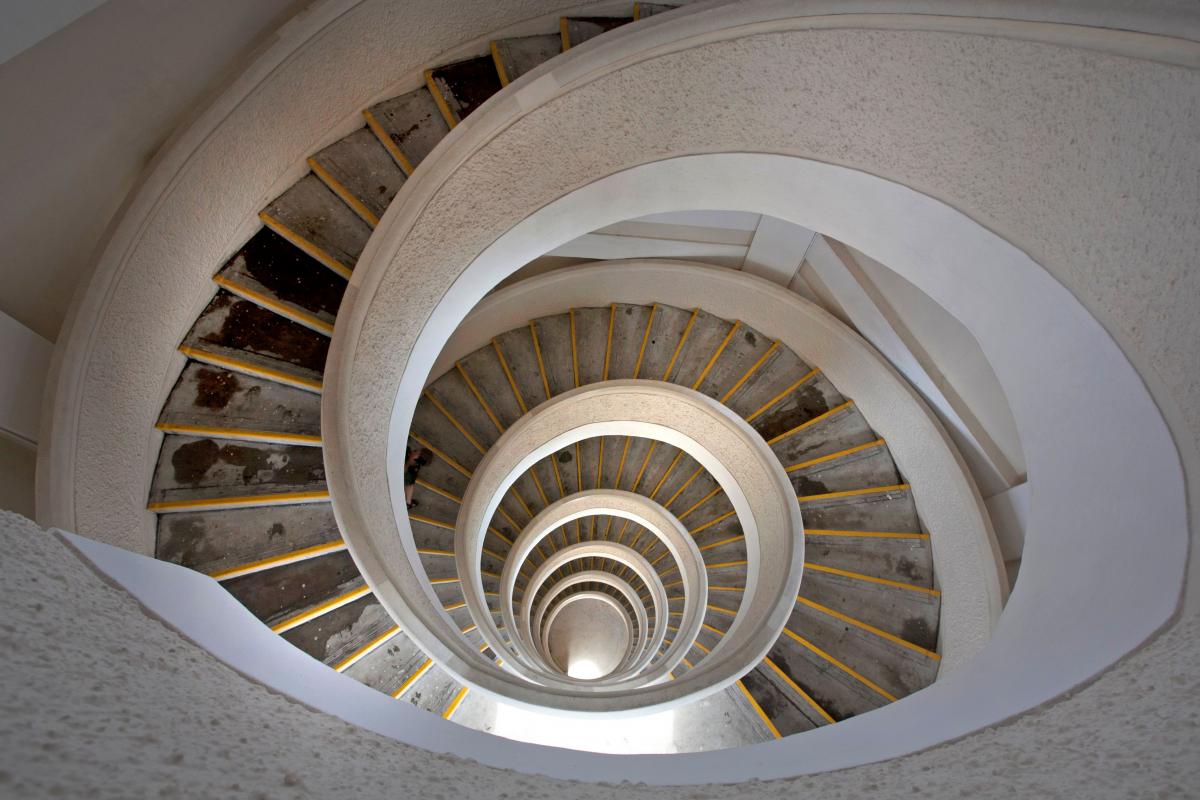
Downward Spiral
“Downward Spiral” June 7, 2026
Genesis 6:9-22
Rev. Heather Carlson, St. John’s Presbyterian Church, Medicine Hat, AB
The opening chapters of Genesis tell one grand story. In fact, Genesis can be divided into two major parts:
-
Genesis 1–11: God and the whole world.
-
Genesis 12–50: God and one family—the story of Abraham and his descendants.
The first eleven chapters describe humanity's condition. They answer the question: What went wrong with God's good world? The second half reveals God's plan to rescue and bless the world through one family.
Genesis begins with God bringing order out of disorder. Life flourishes. Humanity is placed in a garden filled with blessing and abundance. Yet there is a choice. Will human beings trust God's definition of good and evil? Or will they seize autonomy and define good and evil for themselves?
The story that follows is a downward spiral that moves from rebellion, to broken relationships, to violence, and finally to a world overshadowed by death. Yet throughout the decline, God never abandons His creation. He remains committed to rescuing and blessing the world.
Genesis 3 records humanity's first rebellion. Adam and Eve eat from the tree God had forbidden. At first glance, it seems like a simple act of disobedience. But beneath it lies something deeper. The temptation was not merely to eat fruit. The temptation was autonomy from God. The snake suggests that humanity can decide for itself what is good and evil. They can become their own authority rather than trusting God's wisdom.
The moment they choose independence from God, everything begins to unravel. They suddenly become aware of their vulnerability and shame. They hide from one another. They hide from God. When confronted, they begin blaming each other. The intimacy they once enjoyed with God is fractured.
Turning from God means turning away from the very source of life. To rebel against God is ultimately to embrace death because we are rejecting the One who gives life. The garden story shows us that sin is never merely personal. Its consequences ripple outward into every relationship.
The ripple effects appear immediately in Genesis 4. Cain becomes jealous of his brother Abel.
Rather than dealing with his anger, he murders him. The first family becomes the first crime scene. Sin has moved beyond the individual heart and into human relationships.
The tragedy continues through Cain's descendants. Civilization develops. Cities are built. Technology advances. Culture grows. Yet alongside these achievements comes increasing pride and violence. Lamech boasts of revenge and celebrates brutality.
Human progress does not equal moral progress. People can become more sophisticated while remaining deeply broken. The Bible is remarkably realistic. It acknowledges human creativity and achievement while also recognizing humanity's capacity for evil. The problem is not technology. The problem is the human heart. When people reject God, conflict grows, violence increases, and communities become corrupted.
Then Genesis 5 arrives with a genealogy. At first it seems like a list of names. But there is a phrase repeated again and again: "And he died." "And he died." "And he died."
Every generation experiences the same ending. Humanity was created for life, yet now every life is marked by death.
The downward spiral reaches a crisis in Genesis 6. Human wickedness becomes widespread. Violence fills the earth. The text tells us that God grieves.
This is an important image. God is not indifferent to evil. He cares deeply about what happens in His world. His grief reveals His passion to protect creation. The flood is therefore both justice and mercy. Justice because evil cannot be allowed to consume everything. Mercy because God preserves life and gives creation a new beginning.
There is a fascinating parallel between creation and the flood.
At creation there was chaos represented by the waters.
In Noah's day, there is another chaos—the violence and corruption of humanity.
In both situations, something must be done.
In Genesis 1, God creates a world where life can flourish.
In Genesis 6–9, the ark becomes a floating Eden—a refuge from the waters of judgment.
The flood reminds us that creation is not merely something God did once.
God continually sustains creation, holding back chaos and preserving life.
When Noah emerges from the ark, there is hope. Perhaps this time humanity will get it right.
Perhaps a fresh start will solve the problem. But Noah fails too.
The flood changed the environment, but it did not change the human heart. Soon the same patterns reappear. The story moves toward Babel. People discover new technology—the brick.
Instead of using it to serve God's purposes, they use it to make a name for themselves.
Again humanity seeks autonomy.
Again humanity exalts itself.
Again humanity resists God's design.
God humbles them by scattering them across the earth.
In the first handful of chapters we’ve seen the cycle repeat twice. We’ll encounter it five more times by the end of Genesis. God gives opportunity after opportunity. Humanity repeatedly ruins it. We live in a good world suffering the consequences of human rebellion and corruption. God is constantly dealing with the wreckage, working to bring His creation back toward His good purposes.
One commentator observed that Genesis is not simply a straight-line history. It is more like a family quilt. The same patterns appear again and again. Wisdom and folly. Blessing and curse.
Life and death. Faithfulness and rebellion. These stories train us to recognize rebellion when it appears. One student described it as learning to "smell snake." The serpent appears in different forms throughout Genesis. The temptation is always similar: "Don't trust God." "Take control yourself." "Define good and evil on your own terms."
Adam and Eve faced it.
Cain faced it.
Noah faced it.
We face it.
After the flood, God makes a covenant promise. The rainbow becomes a sign that creation will be stabilized. Humanity remains broken. But God's commitment remains firm. Humanity cannot save itself, but God will rescue creation.
There have been glimpses already - Genesis 3 says there is a coming saviour who will defeat the serpent.
-
In the midst of the genealogy, the figure Enoch stands out. Rather than the familiar phrase, "and he died," we read that Enoch walked with God. Even amid the darkness, God preserves a faithful remnant. The story is not over.
Genesis 12 opens with Abraham, whose story we will pick up next week. God chooses one family through whom all nations will be blessed. The story shifts from God and the whole world to God and one family. But the ultimate hope is bigger than Abraham. From the beginning, Genesis points toward a coming Deliverer. God is determined to bless and rescue His creation.
Jesus later spoke about Noah's generation. People were eating, drinking, marrying, and carrying on life as usual, unaware that judgment was approaching. His point was not simply to predict future events. His point was that people often fail to recognize danger - real spiritual danger.
The antidote to the downward spiral is not greater intelligence, better technology, or human self-improvement. It is trusting God and God's wisdom. It is allowing God—not ourselves—to define good and evil. It is walking in the way of life. It is entrusting ourselves to the work of God in Jesus Christ who is the one who crushes the serpent, who does not die, but opens eternal life, and the one who creates the garden and ark - places of connection with our Lord.
The New Testament describes the life that thrives through the Holy Spirit:
Love.
Joy.
Peace.
Patience.
Kindness.
Goodness.
Faithfulness.
Gentleness.
Self-control.
The story of Genesis shows what happens when humanity chooses autonomy. The story of Jesus shows what happens when humanity submits to God. One path leads downward into rebellion, violence, and death. The other leads to life.
And the good news is that even when humanity spirals downward, God's grace continues reaching to rescue us. The God who pursued Adam and Eve in the garden, preserved Noah through the flood, and called Abraham out of obscurity is still at work today. He is determined to bless, redeem, and restore His creation. And because of Christ, the downward spiral does not have the final word. Life does. God does. Thanks be to God. Amen.
World Communion Sunday
Posted On Oct 06 2026