St. John's
Sermon - Mar 15, 2026 God's Place

God's Place
Matthew 7:1-12 “God’s Place”
Lent 4, March 15, 2026
Rev. Heather Carlson, St. John’s Presbyterian Church Medicine Hat, AB
Most of us have a strong instinct to put ourselves in God’s place.
We may not say it out loud, but we often act as if we are the judge of other people’s lives. We decide who is right and who is wrong. We assume we see clearly. We trust our own wisdom. And when someone wrongs us, we often respond in kind. In quiet ways, we begin to live as if the world revolves around our judgment, our wisdom, and our control.
But in this section of the Sermon on the Mount before us this morning, Jesus reminds us of something simple and profound: We must not try to take for ourselves God’s place.
When we forget God’s place, our relationships, human and divine, become distorted. But when we let God be God, our lives begin to take on a different shape— marked by humility, discernment, prayerful dependence, and love.
When we condemn others, we are trying to take God’s place as judge.
“Do not judge, so that you may not be judged.” These may be among the most quoted words of Jesus, yet they are also among the most misunderstood. Used to tear down any kind of shared morality under the guise of being non-judgemental.
As New Testament scholar N. T. Wright notes, “Jesus doesn’t mean we shouldn’t have high standards of behavior for ourselves and our world, but that the temptation to look down on each other for moral failure is itself a temptation to play God.”
“God intends that his world should be ordered, and that injustice should be held in check. Jesus is referring…to the judgments and condemnations that occur within ordinary lives, as people set themselves up as moral guardians and critics of one another.” The problem is not moral concern. The problem is moral superiority. Kingdom people refuse to sit in God’s seat.
Yet this does not mean ignoring sin or abandoning accountability. Christian community requires truth and correction. In fact, community discipline, involving repentance and forgiveness, may be an expression of the deepest love.
But there is a crucial difference between correction and condemnation. Condemnation assumes God’s authority. Correction begins with humility. We see this in the vivid image Jesus gives: Jesus imagines someone leaning in to perform delicate eye surgery—trying to remove a speck from another person’s eye—while a plank is sticking out of their own face.
Jesus “doesn’t rule out the possibility that some people will eventually be able to help others to take specks of dust out of their eyes….But he is warning that the very people who seem most eager to tell others what to do are the people who should take a long look in the mirror before they begin.” (Wright)
When we leave the judgment to God, we have the humility to see ourselves, and one another more clearly.
So immediately after warning against moral superiority, Jesus says “Do not give what is holy to dogs; and do not throw your pearls before swine.” If Jesus were forbidding all moral discernment, this verse would make no sense. Instead, Jesus is teaching that his disciples must learn kingdom wisdom.
In the ancient world, dogs were not beloved household pets. They were dangerous scavengers, and pigs were the epitome of ritual impurity. Jesus is using vivid imagery to make a point: some things are sacred and must be treated with care. The gospel itself is precious. The church is precious. The work of God in the world is precious. When we refuse discernment, we are in danger of sacrificing what is precious. We must heed the wisdom God gives from his rightful place as Lord.
So disciples must avoid two opposite errors:
-
Self-righteous condemnation
-
Moral blindness that refuses to discern good from evil
The Christian life requires humility and wisdom together.
Jesus continues, “Ask, and it will be given you; seek, and you will find; knock, and the door will be opened for you.” This teaching flows directly from what came before. If we are not the judges of others, and if we lack the wisdom to see clearly on our own, then we must turn to God in prayer. Prayer reminds us that God is God and we are not.
Prayer is not about informing God of our needs or persuading God to act. The New Interpreter’s commentary explains: “The encouragement to bring human needs to God in prayer is not to inform or persuade, but an expression of the disciples’ relation to God as dependent children who ultimately are not in control of their own lives.”
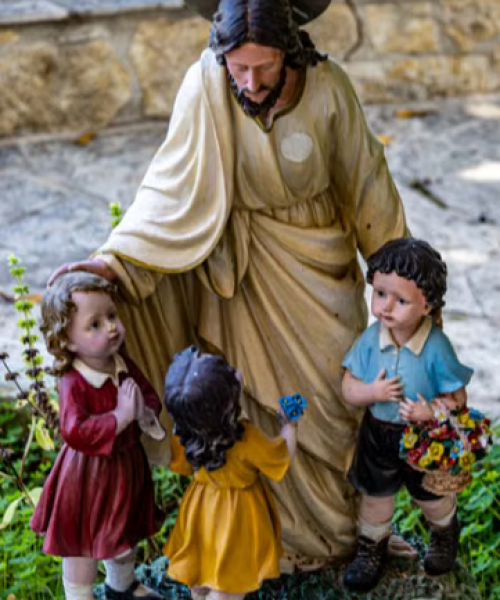
Prayer is the posture of children who trust their Heavenly Father. Jesus uses a simple comparison: even flawed human parents give good gifts to their children. How much more will our heavenly Father give good things to those who ask?
Often the problem is not that we ask for the wrong things. Often “the problem is that we are not nearly eager enough to ask for the right things.” We may hesitate to pray because we think God must be too busy for our small concerns. We may ignore prayer altogether because we assume we can provide for ourselves.
Clementine - worship. Pray for roads, electricity, health, weather. Dependency that nurtures faith.
Jesus assures us that the God who governs the universe is also our good, good Father who listens, and provides out of his goodness. In prayer we surrender control and allow God to shape us.
Jesus concludes this section with one of the most famous ethical teachings in history: “So in everything, do to others as you would have them do to you; for this is the law and the prophets.”
It’s important we hear this well. Jesus doesn’t say:
-
Do to others what they have done to you… they hit me, I hit them back.
-
I don’t want anyone to correct me, so I just ignore the harms of others.
-
‘You do you’ in the extreme that leads to disconnection.
Jesus gives this command in a positive and active form. Not merely avoid harm — actively pursue the good of others. It is initiatory; it calls us to take the first step in love.
And it only makes full sense in the context of the kingdom of God. Because God has shown mercy to us, we show mercy to others. Because God listens to us as a Father, we treat others as neighbors. Because God alone is judge, we are freed to act with humility and grace.
The good news of the gospel is that Jesus himself lived the life he calls us to live.
He judged with perfect justice yet showed mercy to sinners.
He practiced godly discernment.
He trusted his Father in constant prayer.
And he loved his neighbors—even his enemies—with initiating love.
And in the end, he bore the judgment that we deserved so that we might become children of the Father he reveals. The kingdom of God is at hand because in Jesus, God is in God’s rightful place.
As Jesus says, this summarizes “the law and the prophets.”
In the end, this passage calls us to live as children of our heavenly Father. Being shaped by God’s kingdom way.
Those who refuse to condemn others, because judgment belongs to God.
Who seek wisdom so that we may discern well.
Who depend on our Father through persistent prayer.
And we treat others with initiating love.
And when the church lives that way, the world begins to see a glimpse - however fragile - of the kingdom of God.

World Communion Sunday
Posted On Oct 06 2026