St. John's
Sermon - Jan 18, 2026 Jesus at Baptism
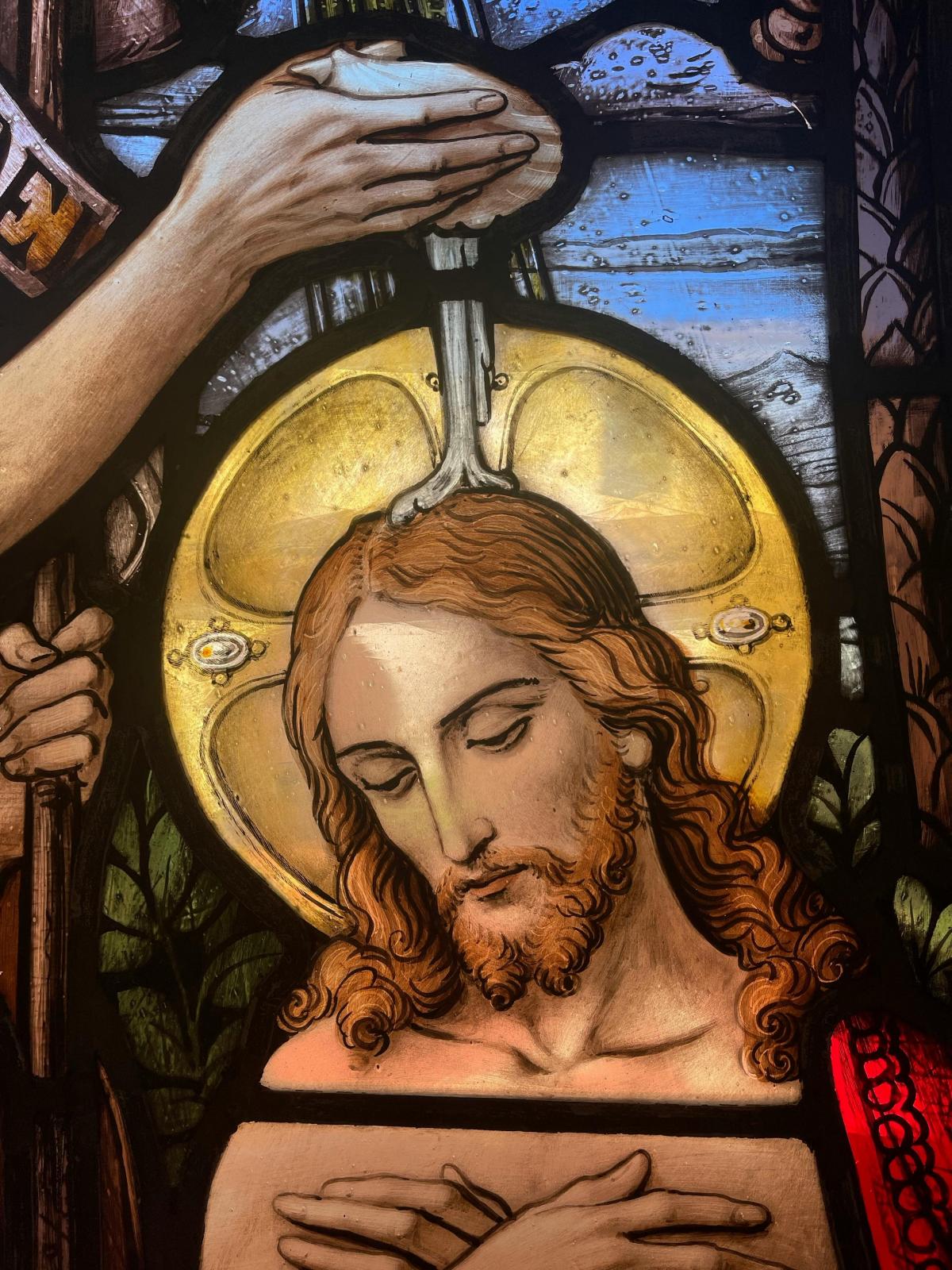
Jesus at Baptism
Matthew 3:13-17
Baptism of Jesus, January 18, 2026
Rev. Heather Carlson, St. John’s Presbyterian Church, Medicine Hat, AB
We’ve been moving a little out of order through Matthew’s Gospel, but since the beginning of Advent we have, in fact, covered the first two and a half chapters.
So let’s take a moment to get our bearings.
We began with the genealogy of Jesus—the long, winding generational story that reminds us God works through real, messy human lives. Then the story of Joseph, obedient to God’s message to wed Mary and name the child Jesus. Then recently we saw the visit of the Magi, outsiders drawn by a mysterious star, and the horrific killing of the innocents, which placed a price on this child’s head almost from birth. In between, we heard John the Baptist, crying out in the wilderness, announcing that the Messiah was coming—one “more powerful than I,” one who would “baptize with the Holy Spirit and fire.”
That brings us today to Matthew chapter 3, verse 13—to the Jordan River, and to the baptism of Jesus. Up until now, the Jesus we have met has been passive. He is born, carried, hidden, threatened. Others act around him—angels speak, kings rage, prophets cry out.
But here, for the first time in Matthew’s Gospel, Jesus steps onto the scene as an adult, and in 4 short verses Matthew surprises us with three key revelations of Jesus’ identity.
Joins in our humanity
John’s baptism was a baptism of repentance. People came confessing their sins, acknowledging that something was broken and needed to be made right. And Jesus, the sinless one, joins them there—not above them, not apart from them, but among them.
John the Baptist has just announced the Messiah will come as the mighty judge, the one who will separate wheat from chaff. And yet this powerful one shows up not with fire, not with armies or angels—but by stepping into the same muddy water as everyone else. John wants to object, but Jesus insists.
From the very beginning of his public ministry, Jesus is telling us what kind of Messiah he is going to be. As N. T. Wright puts it, Jesus comes “identifying himself with God’s people, by taking their place, sharing their penitence, living their life and ultimately dying their death.”
2. Jesus unleashes God’s new creation
When Jesus comes up out of the water, the heavens are opened, the Spirit of God descends like a dove, and rests upon him.
For Jewish hearers steeped in Scripture, this would echo the very first page of the Bible. In Genesis, at the dawn of creation, we’re told that the Spirit of God hovered over the waters. Out of chaos, God brought order. Out of darkness, light. Out of formlessness, life.
Now here, once again, there is water. And once again, the Spirit hovers.
Matthew is telling us that something more than a private religious moment is happening. This is not simply Jesus having a spiritual experience. This is the launch of new creation.
In Jesus, God is beginning again—not by erasing the old world, but by redeeming it from within. The Jordan River becomes the place where God signals: I am doing a new thing, and it begins here.
Christianity is not primarily about escaping the world, but about God renewing it. Not about abandoning our humanity, but about God entering fully into it.
Salvation is not an emergency exit—something that gets us out of the building before it collapses. Salvation is more like a renovation project where God refuses to abandon the house and instead moves in to rebuild it from the inside.”
The same Spirit who hovered over the waters of creation now rests on Jesus, committing God’s own life and power to the long, costly work of restoration.
3. Jesus is the suffering servant come to redeem.
Then comes the voice from heaven: “This is my Son, the Beloved, with whom I am well pleased.”
The words also echo Isaiah 42, the first of the Servant Songs.
“Here is my servant, whom I have chosen,
my beloved, with whom my soul is well pleased.
I will put my Spirit upon him…”
Matthew will quote this passage again explicitly in chapter 12, and when he does, he emphasizes what kind of servant this is:
“He will not wrangle or cry aloud,
nor will anyone hear his voice in the streets.
He will not break a bruised reed
or quench a smoldering wick…”
This is not a conqueror who crushes opposition. This is a servant who handles fragile lives with care. A servant who brings justice not through violence, but through faithfulness and suffering love.
For Matthew, Son of God and Suffering Servant belong together. You cannot have one without the other. At Jesus’ baptism, God is not only affirming who Jesus is, but also what his mission will cost him. The path from the Jordan River leads eventually to the cross.
Earlier, John the Baptist warned of coming judgment—and judgment is still very much part of the story.
In Acts, Peter will later preach that Jesus “is the one ordained by God as judge of the living and the dead,” and that “all the prophets testify about him that everyone who believes in him receives forgiveness of sins through his name.”
Judgment is real—but notice how it is redefined. There is no warhorse here. No vindictive spirit. Instead, there is a dove. The sign of God’s judgment is not destruction, but peace. Not annihilation, but reconciliation.
Jesus will judge the world not by crushing it, but by exposing it to the truth of God’s love. By shining light into darkness. By absorbing violence rather than inflicting it.
Jesus comes to enter our humanity, to launch God’s new creation, and to demonstrate God’s salvation come as a suffering servant.
Jesus’ baptism is unique—but it is not unrelated to ours. When we are baptized in the name of the Father, Son, and Holy Spirit, we are also participating in an act of obedience. We are stepping into the water, trusting that God is at work before we fully understand how.
Just as Jesus was declared God’s Son at his baptism, so in baptism we are declared God’s children. Not because we have earned it. Not because we are ready. But because God chooses to name us as beloved and belonging.
Wonderful to remember birthdays - Colleen has printed out for me those who are in our database. But I’ve always been just as interested in us knowing our baptism birthday. The mark of God’s grace coming to save and send us.
We light a candle, special dinner, prayer, and story. Opportunity to wonder and marvel at God’s love.
If you’ve been baptized, think back—maybe you remember the moment, maybe you don’t. Either way, baptism isn’t about your memory of God, but God’s memory of you. If you haven’t yet been baptized, hear such words as an invitation to consider baptism.
“On your inhale, silently pray: Beloved.
On your exhale: I belong.”
We emerge from the water not with all the answers, but with a calling: to live as part of God’s new creation, to embody the gentleness of the suffering servant, and to trust that God delights in us even as we are still being shaped.
The same Spirit who hovered over the waters, who descended upon Jesus, now rests upon his church. And that is good news.



World Communion Sunday
Posted On Oct 06 2026