St. John's
Sermon - Oct 20, 2026 Matthew 22:15-22 - Oct 18 Sermon
Matthew 22:15-22 - Oct 18 Sermon
Matthew 22:15-22
October 18, 2026
Rev. Heather Carlson, St. John’s Presbyterian Church, Medicine Hat, AB
The Pharisees and the Herodians have come together to question Jesus. They are unlikely allies who ordinarily have very different interests. But they have found something they agree on: Jesus is a problem, and they want to discredit him. So after a bit of flattery comes a trap. “Is it lawful to pay taxes to the emperor, or not?”
Seems somewhat straightforward to us. We might like or dislike paying taxes, but in most years, April 30th comes and goes with little discussion in the church.
Not so in the time of Jesus. This is a hot topic.
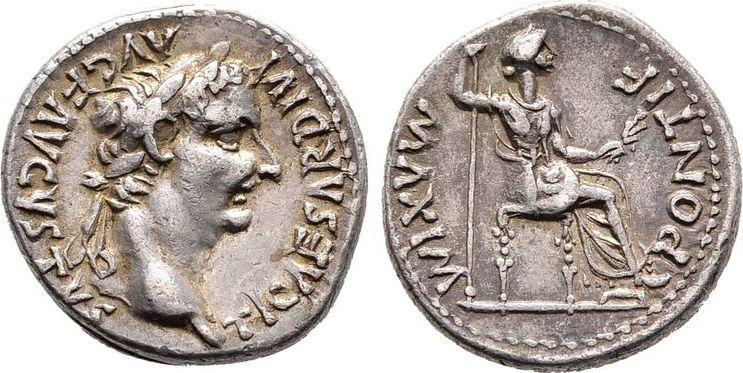
If Jesus says yes, pay the tax to Caesar, he risks alienating faithful Jews. This is no ordinary tax. It is an imperial tribute paid to Rome, the occupying power. People are being required to pay their oppressors to sustain the very system under which they are oppressed. For many Jews, the tax represents humiliation as well as a religious dilemma. The emperor's image on the coin raises questions about idolatry and allegiance.
But if Jesus says no, the Herodians can accuse him of rebellion against Rome. Rome has already crushed Jewish rebels, and is poised to quickly do so again. So either answer puts Jesus in danger. He must either betray his people or appear to declare war on the empire.
Instead, Jesus responds by asking to see the coin used to pay the tax. “Whose head is this, and whose title?” “Caesar’s,” they answer. “Give therefore to the emperor the things that are the emperor’s, and to God the things that are God’s.” Jesus refuses to be trapped in their argument. Instead, he raises a bigger question: Who has authority to rule? And to whom do we ultimately belong?
Those questions are timely on the eve of our provincial referendum, as we consider immigration, constitutional reform, and our relationship with the nation. These are significant questions about identity, belonging, responsibility, and the future we hope to build. Not unlike the questions swirling Jesus that day. Yet Jesus doesn’t provide a simple answer.
Jesus asks to see a denarius, a coin bearing the emperor's image and an inscription proclaiming his authority. Every time someone uses it, Caesar's power is made visible. But Jesus' question leads us to another: if the coin bears Caesar's image, who bears the image of God?
The answer takes us back to Genesis, where Scripture tells us that human beings are created in the image of God. Not just some human beings. Not just those who share our citizenship, our cultural background, or our political convictions. Human beings. As the commentary Feasting on the Word puts it, “Our flesh and blood bear the image of God.” Every life bears the imprint of the One who is its source and destination.
And that challenges the way we often see one another. We may look at what people have, what they wear, what they do, where they come from, and the company they keep. We identify people by their status, nationality, politics, or place in society. But none of those things tells the whole truth about a person. Before we are citizens, we are creatures of God. Before we are identified by our political positions, we are people made in God's image.
That does not make our differences unimportant or give us easy answers to difficult questions. It means that no political identity can define the full worth of a human being. No political argument can erase the image of God.
As Presbyterians, we believe faith belongs in the public square. We pray for governments, care about justice and the common good, and recognize our responsibilities to the communities in which we live. We do not retreat into the church and pretend that public decisions have nothing to do with our faith. But neither can we confuse the government with God.
There are two temptations here. One is to collapse loyalty to the public sphere and loyalty to God into one thing, treating our nation, our political convictions, or our preferred future as sacred. The other is to separate faith and politics completely, as if our faith has nothing to say about the way we treat our neighbours or exercise power.
Jesus rejects both approaches. He does not say Caesar is God. Nor does he suggest that God's people can ignore the world in which they live. In Matthew 6, Jesus says that no one can serve two masters. He is not offering a formula for dividing our loyalty neatly between God and government.
There are times when we cooperate with civil authority, and times when faithfulness requires us to question authority, challenge injustice, or resist what is wrong. Our faith does not give us a simple answer for every political circumstance. It gives us a Lord by whom we discern our responsibilities. That discernment requires prayer, humility, careful thought, and a willingness to listen to people whose experiences differ from our own.
Governments matter. Political decisions matter. But no government, nation, or constitutional arrangement is our salvation. God alone is sovereign.
Can we discuss immigration, constitutional reform, and national belonging without reducing the people affected by these questions to political problems to be solved? Can we care about the future of our province while remembering that God's love is not confined by its borders? These are questions about how we will live with one another, whatever the result.
For Christians, the test is not simply whether a political outcome suits our preferences. It is whether we have taken our responsibilities seriously, listened to the truth, cared for our neighbours, and resisted the temptation to make our own interests the measure of everything.
We can love our province and care deeply about its future. We can hold convictions about immigration, constitutional arrangements, and national identity. But can we hold those convictions without denying the image of God in those who disagree with us? Can we take our concerns seriously without allowing fear to become our master? That is part of what it means to belong to Christ.
There is another dimension to this passage. Jesus is not speaking from a position of political security. He is on his way to Jerusalem, having already predicted his suffering and death.
On Palm Sunday, the previous chapter, the crowds welcomed him with hopes for a king who will liberate Israel from its oppressors. Some will expect a warrior who restores the nation through force. But Jesus will not be that kind of king. He will be the king who gives himself freely. He will not establish his reign by destroying his enemies. He will go to the cross.
Jesus refuses to let the emperor define his identity, and he refuses to let the political hopes of his own people determine the shape of his kingship. His kingdom cannot be reduced to a nation, an empire, a party, or a constitutional arrangement. And yet his kingdom has everything to do with how we live in this world: with justice, mercy, truth, forgiveness, and the care of our neighbours.
So when the opponents ask “shall we pay taxes to Caesar?” They are also asking, “Who is this Jesus?” Is he simply a teacher whose words we admire or reject? Or is he the Lord whose life and death reshape how we understand every other form of authority?
For Christians, Jesus Christ is Lord. No earthly authority is absolute. No political project is our salvation. That confession does not remove us from public life. It sends us into public life with different commitments. We can participate in civic decisions without expecting them to save us. We can hold political convictions without confusing them with the gospel. And we can remember that the people with whom we disagree are not beyond God's reach or outside God's care.
The commentary Feasting on the Word reminds us that there is something beyond even death and taxes that is certain: God's pardon in the midst of uncertainty, God's mercy and grace offered to those in need, and God's new life granted to those who are dying.
That is a promise we need. We do not always know what the faithful choice is. We can act with good intentions and still get things wrong. We can become so absorbed in defending our positions that we forget what belongs to God. Even Jesus' questioners are so intent on their contest that they fail to recognize the One standing before them. We can do the same. We can become so caught up in the arguments of our time that we forget to look for Christ among us.
So let us enter tomorrow with seriousness, prayer, and the intention to have our actions align with love for God and neighbour. Let us take our civic responsibilities seriously, but never mistake earthly authority for God. Let us disagree where we must, without forgetting the dignity of the person across from us.
The coin bears Caesar's image. But we bear the image of God. And to God, we belong. Thanks be to God.
World Communion Sunday
Posted On Oct 06 2026